

LED screen or projection: how to choose
Choosing between an LED screen and video projection comes down to four criteria: ambient light, image size and audience distance, the space available for installation, and budget. LED is the answer outdoors in daylight, in lit rooms and for large surfaces. Projection remains relevant in a darkened room, for a medium-sized image and a tight budget.
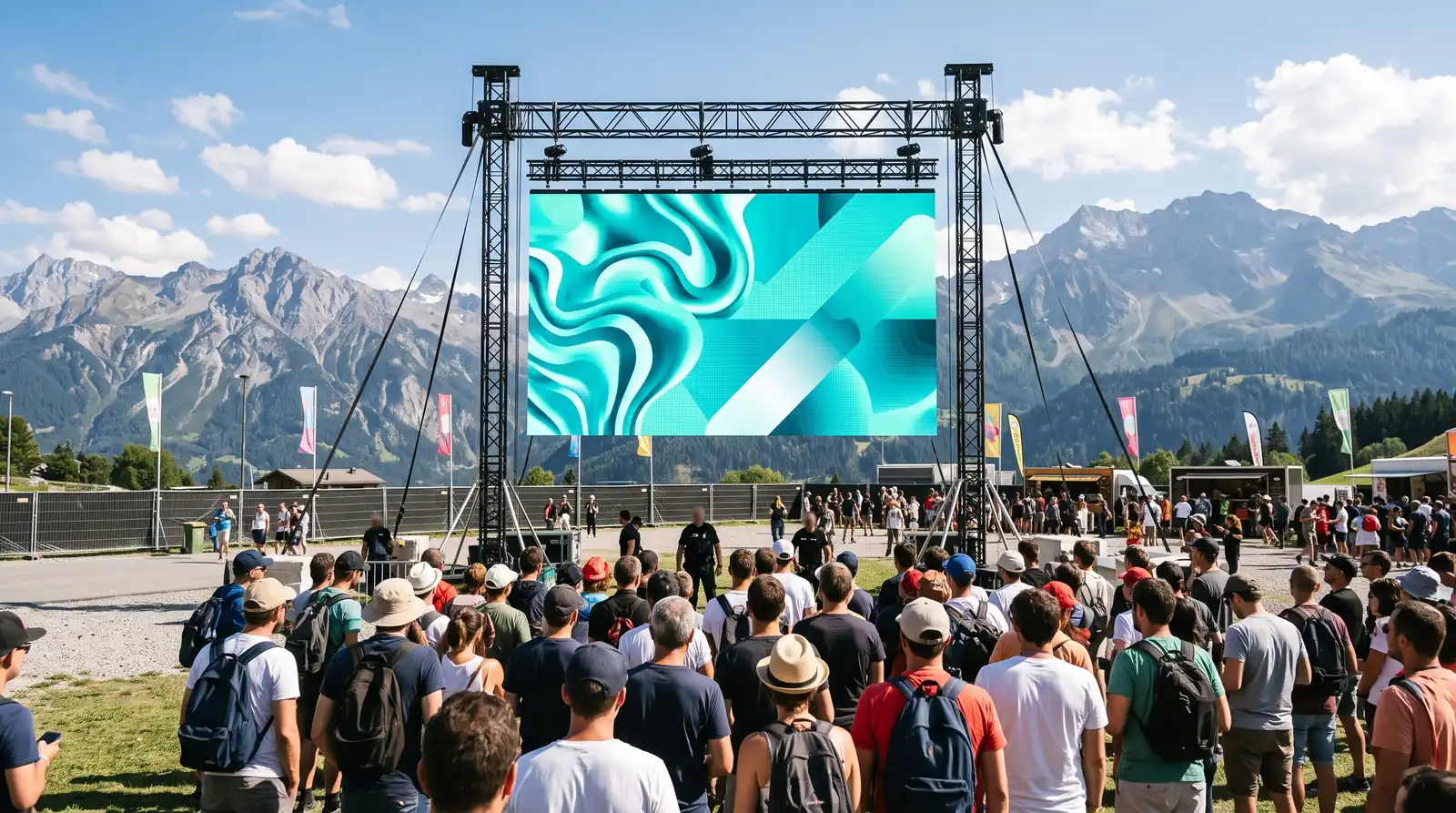
The four criteria
Ambient light. This is usually what decides. A room that can be darkened: both work. Glazed room, daylight, outdoors: LED screen.
Image size and distance. A large image seen by a deep audience needs a lot of light in projection. An LED screen is sized freely, panel by panel, and its pitch is chosen from the distance of the front row.
Installation. Projection needs a clear beam path and a tensioned screen. LED needs a structure, floor or rigging able to take its weight, and a properly sized power supply.
Budget. For the same image in a darkened room, projection generally costs less. In daylight or on large surfaces, LED becomes the reasonable choice.
In practice
| Situation | Recommended |
|---|---|
| Darkened room, medium image | Projection |
| Lit or glazed room | LED screen |
| Outdoors in daylight | LED screen |
| Large stage, deep audience | LED screen |
| Very wide panoramic image | LED screen or blended projection |
| Tight budget, darkened room | Projection |
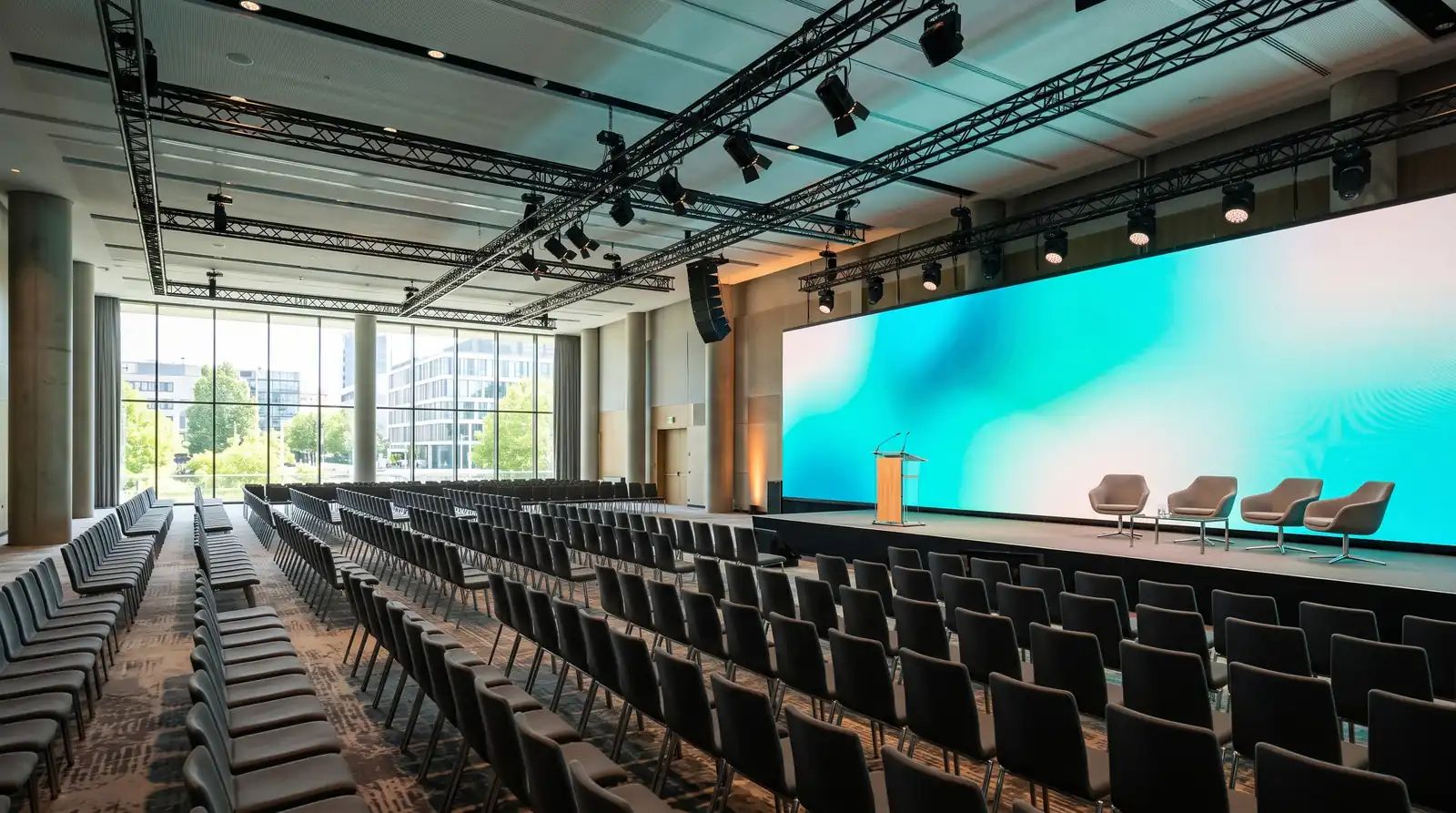
What stays the same
In both cases, content must be prepared in the right format, the source must be doubled for critical moments, and a technician stays at the control desk during operation.
Further reading: LED screen rental, video projection, LED screen FAQ.
Frequently asked questions
Can a powerful projector replace an LED screen in daylight?
Rarely. A projected image is light reflected on a screen: as soon as ambient light hits it too, blacks turn grey and contrast collapses. An LED screen produces its own light and stays readable in sunlight.
Is projection cheaper?
For a medium image in a darkened room, generally yes. Once the image has to be large, bright or visible in daylight, the gap narrows, because several powerful projectors, a suitable screen and more adjustment are needed.
How much space does projection need?
A clear path between projector and screen, with no audience or set in the beam. For front projection the distance depends on the lens; for rear projection, free space is needed behind the screen. An LED screen stands against a wall or on a structure, with no beam to protect.
Can both be combined?
Yes. A central LED wall for the main image and side projections for reminders is a common conference setup.
In the same area
Giant LED screen rental in Switzerland
Giant LED screen rental and installation in Switzerland: pitch, structure, power, calibration, content in the right format, build and operation.
LED screen rental in Lausanne
Giant LED screen rental and installation in Lausanne: general meetings, congresses, launches, fan zones and lakeside events. Survey, build, operation.
LED screen rental in Geneva
Giant LED screen rental and installation in Geneva: international organisations, congresses, trade fairs, launches and lakeside events. Survey to load-out.
Frequently asked questions about LED screen rental
Pixel pitch, screen size, power, content formats, outdoor use, lead times: the questions that come up about renting a giant LED screen, with answers.
What an LED screen changes at an event
Daylight legibility, live content, visible sponsors, stage design: what a giant LED screen actually changes at an event, and the constraints it brings.
Let’s talk about your event
Tell us what you are organising, for how many people, where and when. We reply within one working day.