

Sound: what the service includes
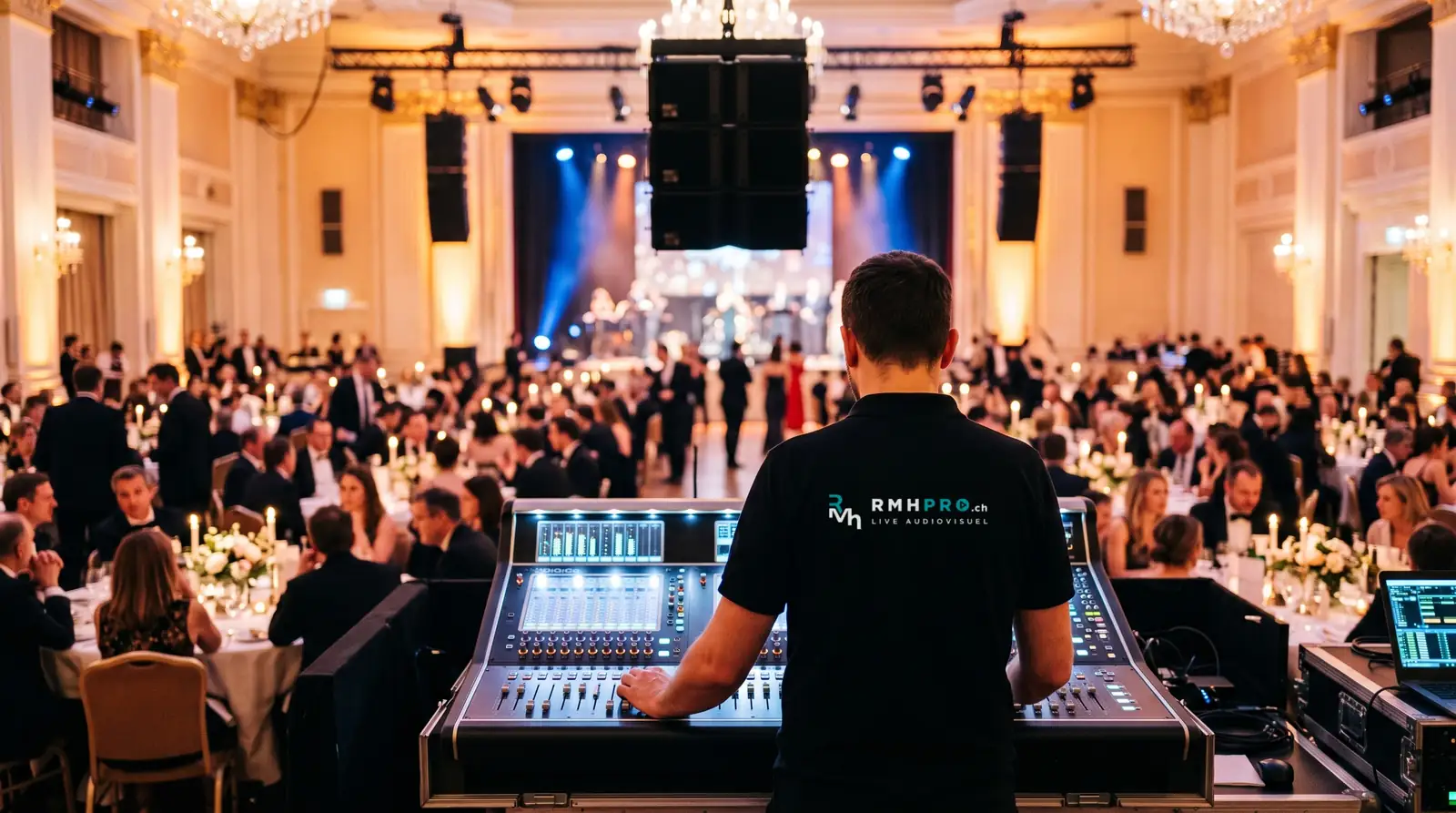
RMHpro sizes and operates the sound system for an event according to the size of the venue, the nature of the programme and the layout of the audience: main system, delays, monitors, microphones, processing and operation. The priority is that everyone hears clearly, from the front row to the back, without excessive volume. Sound is designed together with the LED screen and the lighting, not after them.
What the service includes
Acoustic survey of the venue, choice and sizing of the system, supply of speakers, console, microphones and cabling, build, tuning on site, operation during the event by our sound technicians, then load-out. On a setup operated by RMHpro, our technicians stay from start to finish.
How the configuration is decided
The programme determines the type of system. Speech calls for intelligibility: the voice must be understood, not just heard. A concert calls for dynamics and bass. An evening that moves from one to the other calls for a system capable of both, set differently depending on the moment.
The venue and the audience determine the coverage. The distance to the back row, the width of the room, balconies and adjoining areas decide the number of speakers and their positions. A reverberant room requires more directional speakers and tighter placement.
The stage determines the monitors. Speakers and musicians need to hear themselves. Floor wedges, in-ear monitors or simple voice reinforcement depending on the programme.
The speakers determine the microphones. Handheld, headset, lavalier or table microphone depending on how people speak, with a frequency plan for wireless systems. Microphones and audio capture
By type of event
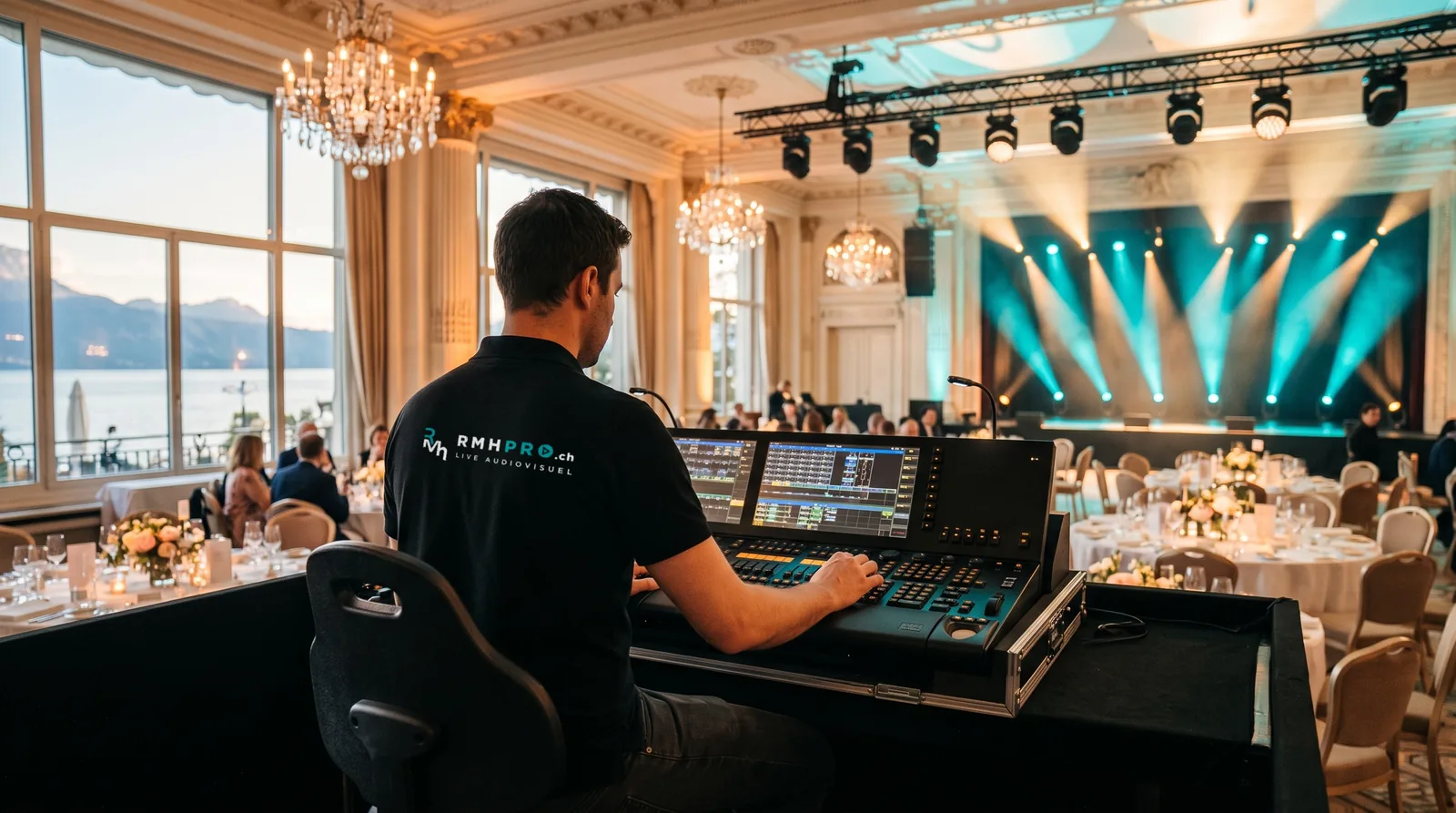
Conference and general meeting. A system tuned for speech, speaker microphones and audience microphones for questions, recording of the session. The mix for remote participants is separate from the room mix. Conferences and corporate events
Corporate evening and awards ceremony. Speeches at the start of the evening, music afterwards. The system is sized for music and set for speech at the right moment.
Concert and show. Main system, stage monitors, front-of-house console and monitor console if the programme requires, reading of the artists’ rider and tuning in the actual venue. Concerts and festivals
Ceremony and large gathering. Even coverage of a large audience, delay towers on an extended site, feeds to adjoining areas, redundancy on the console and the links.
Outdoors. Throw, wind and neighbours are taken into account from the sizing stage. Sound level limits set by the municipality or the venue are built into the project, not dealt with on the day.
What needs to be provided at the venue
- a) a power supply dedicated to sound, separate from lighting and catering
- b) a control position with a direct view of the stage, away from audience routes
- c) access for the equipment and a protected cable route
- d) the venue’s rules on sound levels and hours
- e) the timed programme and list of speakers, to prepare the microphones
System tuning
A system is tuned in the venue, once built, with the room as it is. Tuning corrects the system’s response to the venue’s acoustics, aligns the speakers with each other and removes the causes of feedback. It is done before the audience arrives and checked once the room is full.
Redundancy
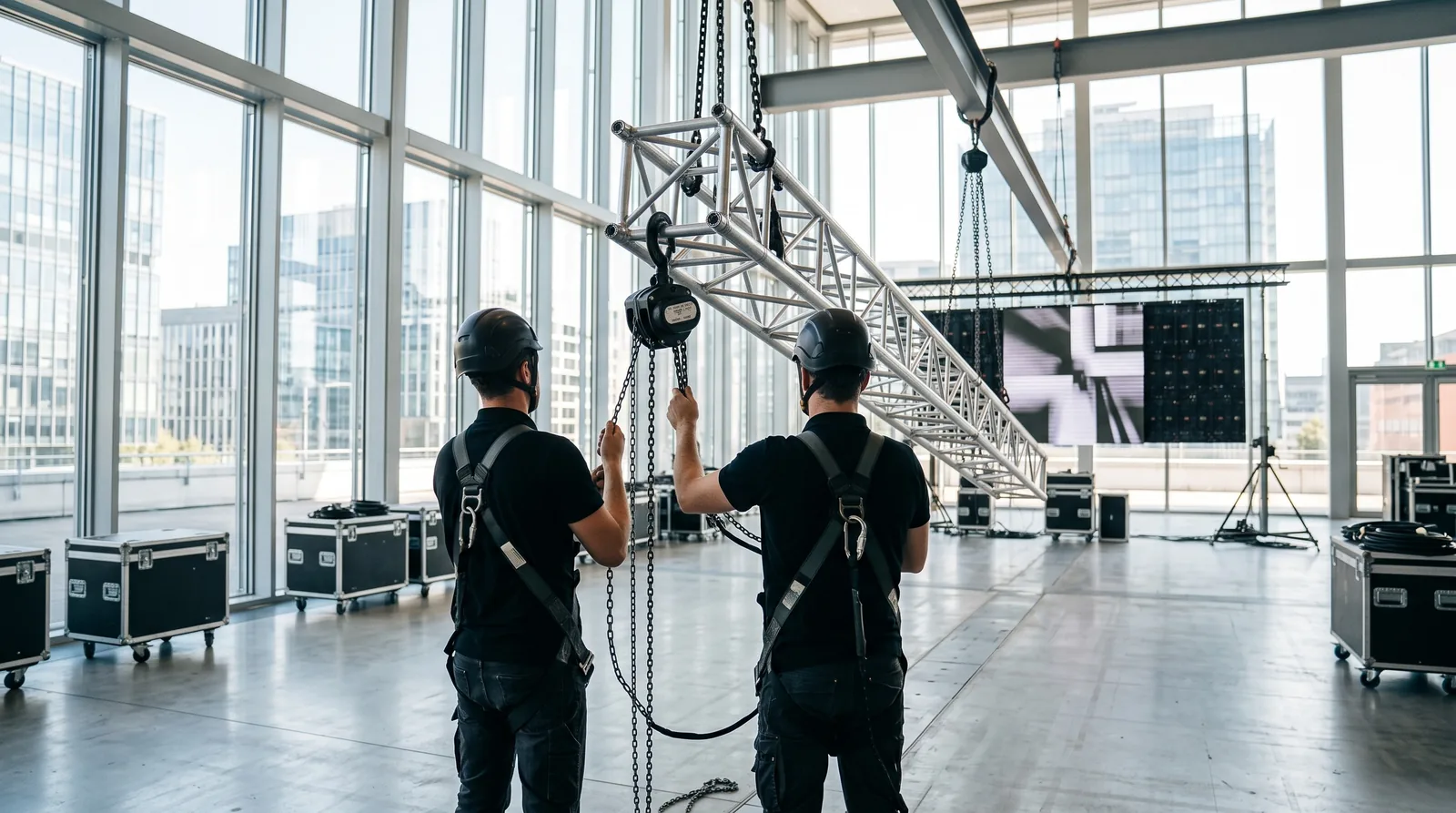
At an event that cannot be repeated, the main console has a backup console ready, critical microphones are doubled and the links to the speakers have a fallback path. It is a line in the quote, not an intention.
With screens and lighting
Sound is not designed on its own. Speaker positions depend on the stage and the LED screen, the sound control position sits next to the lighting and video control, and power is shared between all three. Giant LED screens - Event lighting
Frequently asked questions
What determines the power needed?
The size of the venue, its reverberation, the distance of the furthest listener and the nature of the programme. A conference and a concert in the same room do not need the same system. Power is not the right criterion anyway: what counts is even coverage of the audience.
Why use delay speakers?
Because a single system at the front forces you to push the volume to reach the back, which makes the front row unbearable. Delays spread around the room, or delay towers on a large open-air site, give an even level everywhere.
Can feedback be avoided?
Yes, in almost every case. It comes from the position of microphones relative to speakers and from poorly set processing. It is resolved during system tuning, before the audience arrives.
What needs to be provided at the venue?
A power supply dedicated to sound, separate from lighting and catering, a control position with a view of the stage, and access for the equipment. We check these points at the site survey and measure the room’s acoustics.
In the same area
Sound, lighting and structures
Sound, lighting and structures designed together with the LED screen, then projection, network, power and intercom: sizing and operation in Switzerland.
Video projection
Event video projection: throw ratio calculation, required brightness, positioning and surfaces. RMHpro sizes and operates projection for your event.
Event lighting: what the service includes
Stage lighting, architectural lighting and camera-ready lighting for events. Design, equipment, operation, and a balance that works with the LED screen.
Microphones and audio capture
Wireless handheld, lavalier, headset and conference microphones, plus ambient audio capture. Frequency planning and wireless coverage for events.
Let’s talk about your event
Tell us what you are organising, for how many people, where and when. We reply within one working day.